AI Agents in the Enterprise
The modern workplace is undergoing a significant transformation. For years, businesses have adopted artificial intelligence primarily through assistive technologies - chatbots that draft emails, copilots that suggest code, and AI platforms that summarize meetings and documents.
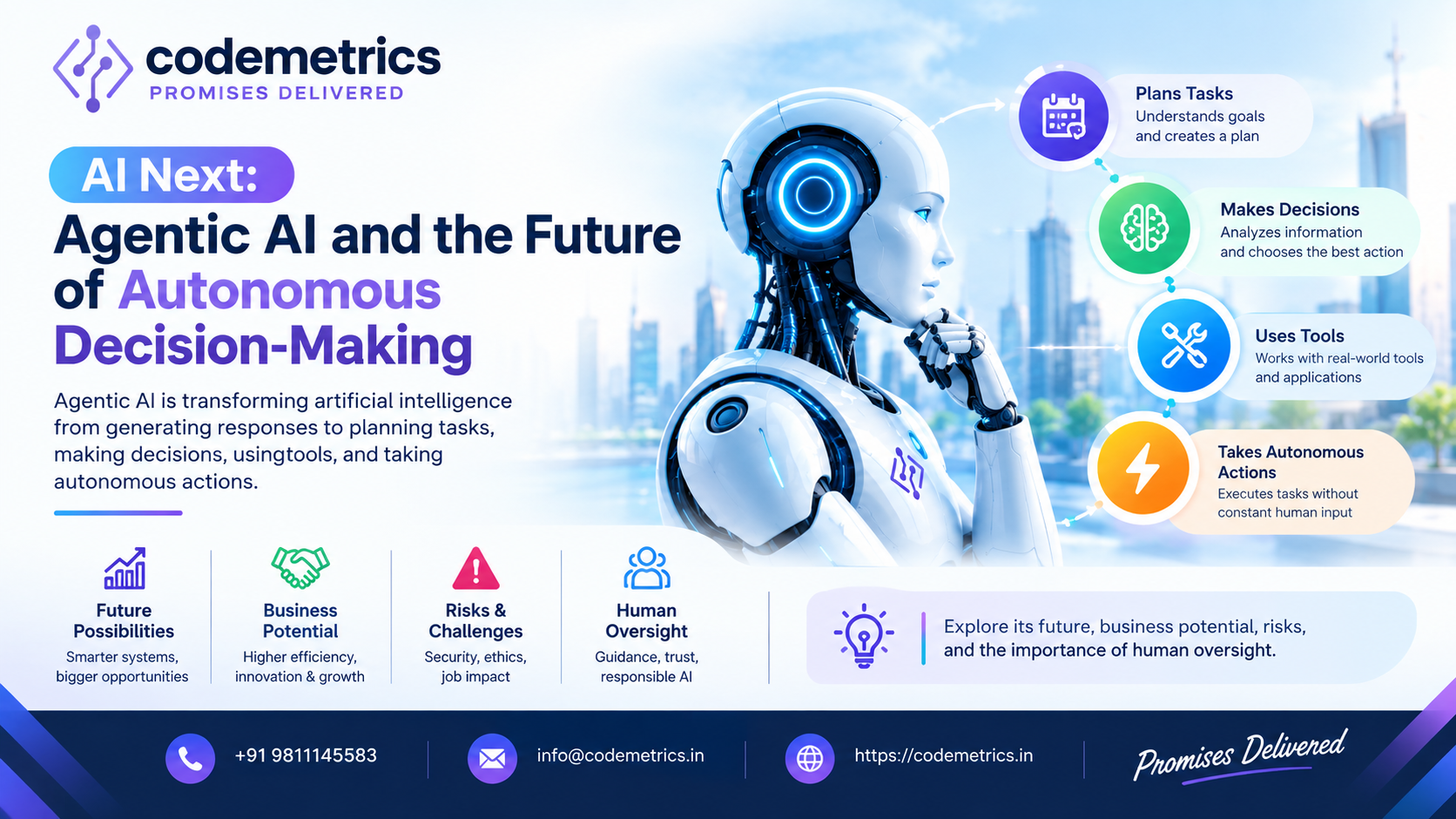
Now, organizations are moving toward AI Agents in the Enterprise, where AI systems can move beyond generating responses and begin performing tasks. These systems can reason through objectives, interact with business applications, use digital tools, retrieve information, and execute multi-step workflows with varying levels of human supervision.
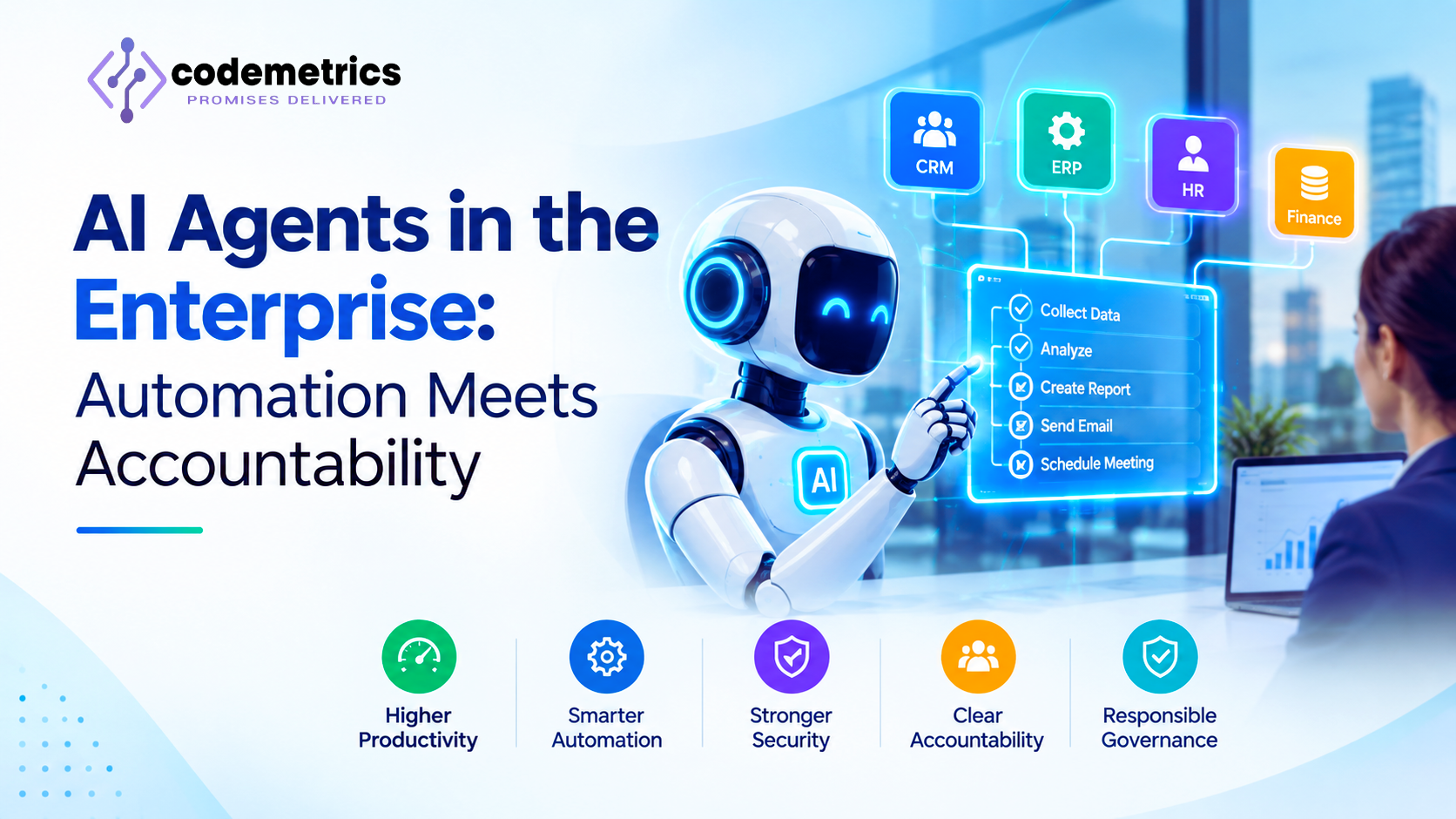
For example, an AI agent could retrieve customer information from a CRM, analyze sales data, prepare a performance report, send an approved communication, and create a follow-up task. This shift can significantly improve operational efficiency, but it also introduces a critical question: who remains accountable when an autonomous system takes action?
The Promise of Enterprise Automation
The growing adoption of Enterprise AI Agents reflects a broader shift from isolated AI assistance toward connected business automation.
1. Connecting Cross-Functional Workflows
Large organizations often rely on multiple systems, including CRM, ERP, HR, finance, customer-support, and project-management platforms. Employees frequently spend considerable time transferring information between these systems.
AI agents can coordinate information and actions across connected applications. For example, an employee onboarding workflow could involve collecting documents, creating accounts, notifying relevant departments, updating HR systems, and scheduling training.
When properly designed, this approach can reduce manual handoffs and improve process consistency.
2. Reducing Repetitive Administrative Work
Data entry, ticket classification, appointment scheduling, report preparation, and routine document processing can consume significant employee time.
AI agents can automate many of these repetitive activities while allowing employees to focus on activities requiring judgment, creativity, communication, and strategic thinking.
The objective should not simply be replacing human activity. Instead, organizations can use automation to redesign workflows so people spend more time on work where human context and decision-making matter.
3. Supporting 24/7 Operations
Unlike human teams, software systems can continuously monitor defined processes. An agent can watch for operational events, identify predefined conditions, initiate approved workflows, and alert employees when human intervention is required.
This can be particularly useful for customer support, system monitoring, compliance workflows, and operational alerts.
However, continuous operation also means that an incorrect instruction or configuration can potentially produce repeated errors at scale.
The Risks Behind Autonomous AI
The benefits of automation must be considered alongside the risks associated with giving software systems greater authority.
1. The Accountability Challenge
When an AI agent makes an incorrect decision, responsibility can become difficult to establish.
Consider an agent that sends an incorrect customer quotation, modifies an important business record, or communicates information that has not been approved. The organization must determine whether the issue originated from the model, its instructions, connected data, software integration, configuration, or insufficient human oversight.
This makes AI Agent Governance an essential part of enterprise deployment. Organizations need clear ownership, approval processes, escalation procedures, and records showing what the system did and why.
2. Excessive Permissions and Security Exposure
AI agents need access to tools and information to perform useful tasks. But excessive permissions can increase the potential impact of an error or security incident.
An agent connected to a CRM may need customer information but not access to payroll records. A reporting agent may need to read financial data without having permission to modify transactions.
The principle of least privilege should therefore apply to agents just as it applies to human users and applications.
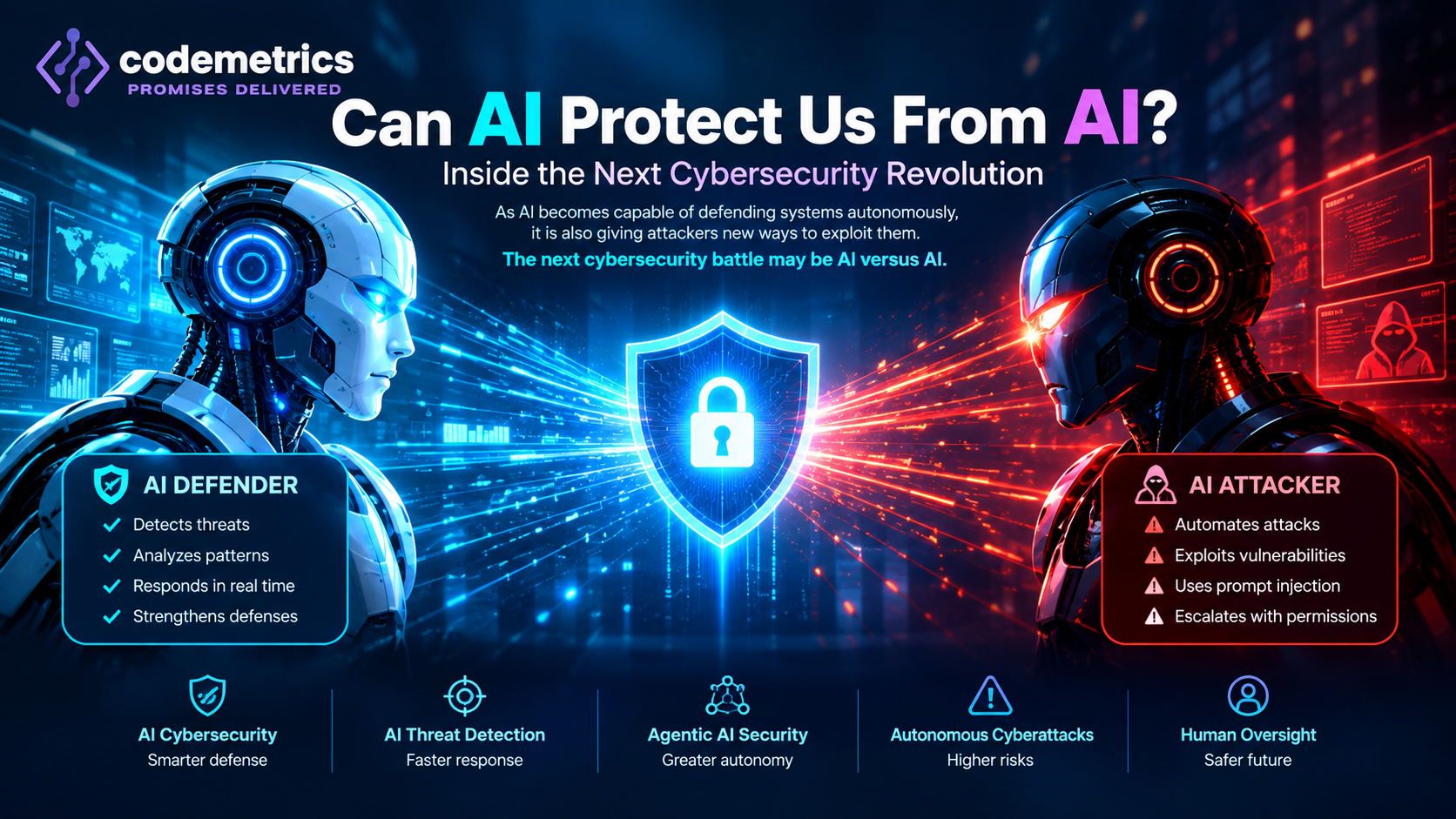
Organizations should also consider prompt injection, malicious documents, compromised integrations, unauthorized actions, and sensitive-data exposure when designing agent workflows.
3. The Enterprise Blast Radius
A traditional software error may affect a single process. An autonomous agent connected to several systems could potentially propagate an error across multiple workflows.
For example, an incorrectly configured purchasing agent could repeatedly create inappropriate orders. A compromised support agent could expose customer information. A flawed workflow could update thousands of records before an issue is detected.
This is why Autonomous AI Agents should be deployed with controlled permissions, monitoring, rate limits, validation mechanisms, and clearly defined boundaries.
Building Effective AI Agent Governance
Organizations should approach agent deployment as an engineering and governance challenge rather than simply an automation project.
Human Approval for High-Impact Actions
Not every action needs human approval. Low-risk activities such as categorizing tickets may be automated, while high-impact activities - such as financial transfers, deleting records, changing access permissions, or sending legally significant communications - should include appropriate approval checkpoints.
Validation Gates Before Execution
Validation gates can evaluate an agent's proposed action before it reaches a production system.
For example, an organization could require an agent to:
Generate a proposed action.
Validate the input data.
Check business rules and authorization.
Evaluate risk conditions.
Request human approval when thresholds are exceeded.
Execute the action only after validation succeeds.
Record the complete event for auditing.
These gates can help organizations identify errors before they create real-world consequences.
Continuous Monitoring and Auditing
Organizations should maintain detailed records of agent activities, including inputs, tool calls, decisions, approvals, outputs, and failures.
Monitoring can help security and operations teams identify unusual behavior, repeated failures, unexpected access patterns, or deviations from approved workflows.
Testing should also continue after deployment because connected systems, business rules, models, and data can change over time.
Building Responsible Enterprise Automation
The future of AI Agents in the Enterprise will depend not only on what these systems can accomplish but also on how organizations control their capabilities.
Enterprise AI Agents can create substantial value when they are integrated into carefully designed workflows with appropriate permissions, validation, monitoring, and human oversight.
At the same time, AI Agent Governance must remain an ongoing process rather than a one-time compliance exercise. Organizations should continuously evaluate risks, test failure scenarios, review permissions, and update safeguards.
Autonomous AI Agents can become powerful components of modern enterprise technology, but autonomy should always operate within clearly defined boundaries. The objective is not automation at any cost; it is dependable automation supported by accountability, security, and human control.
How Can Enterprises Validate Autonomous Actions?
Enterprises can introduce layered validation gates that check data quality, permissions, business rules, risk thresholds, and expected outcomes before an agent performs a high-impact action. Human approval can then be required for sensitive decisions, while monitoring and audit logs provide visibility after execution.
The most effective approach combines technical safeguards with clearly assigned responsibility. By treating AI agents as powerful software systems - not independent employees - organizations can pursue automation while maintaining appropriate control over business operations.
AI Agents in the Enterprise are redefining how businesses automate workflows, improve productivity, and accelerate digital transformation. Codemetrics Infotech Pvt. Ltd. helps businesses explore and build scalable software solutions that connect AI capabilities with enterprise applications, business workflows, cloud platforms, and data systems. From intelligent process automation to custom enterprise software, our technology solutions are designed around real business requirements, security, scalability, and measurable operational value. Looking to turn AI opportunities into practical business solutions?
Ready to explore AI-powered automation for your business?
Book a demo with Codemetrics Infotech Pvt. Ltd.
Contact: 098111 45583